How Indian Restaurants Can Use Digital Marketing to Fill Tables Every Week in 2026
A diner deciding where to eat tonight in 2026 makes that decision very differently than a diner did ten years ago.
Ten years ago, the choice was mostly shaped by word of mouth, habit, and what they could see from the street. Today, that decision happens on a phone screen, usually through Google Maps or Instagram, and the restaurant that wins the decision is not necessarily the one with the best food. It is the one that looks the best, feels the most familiar, and gives the prospective customer the most confidence before they leave home.
For restaurant owners and food business operators in India, this shift is either the biggest threat they face or the biggest opportunity available to them, depending on whether they have adapted to it.
The Three Digital Channels That Drive New Customers to Indian Restaurants
Google Maps — Where the Decision Happens
When someone in Nagpur, Mumbai, Pune, or any Indian city searches for a cafe for a birthday lunch or a restaurant for a client dinner, their first action is almost always opening Google Maps or Google Search. The results they see are the restaurants that have invested in their Google presence.
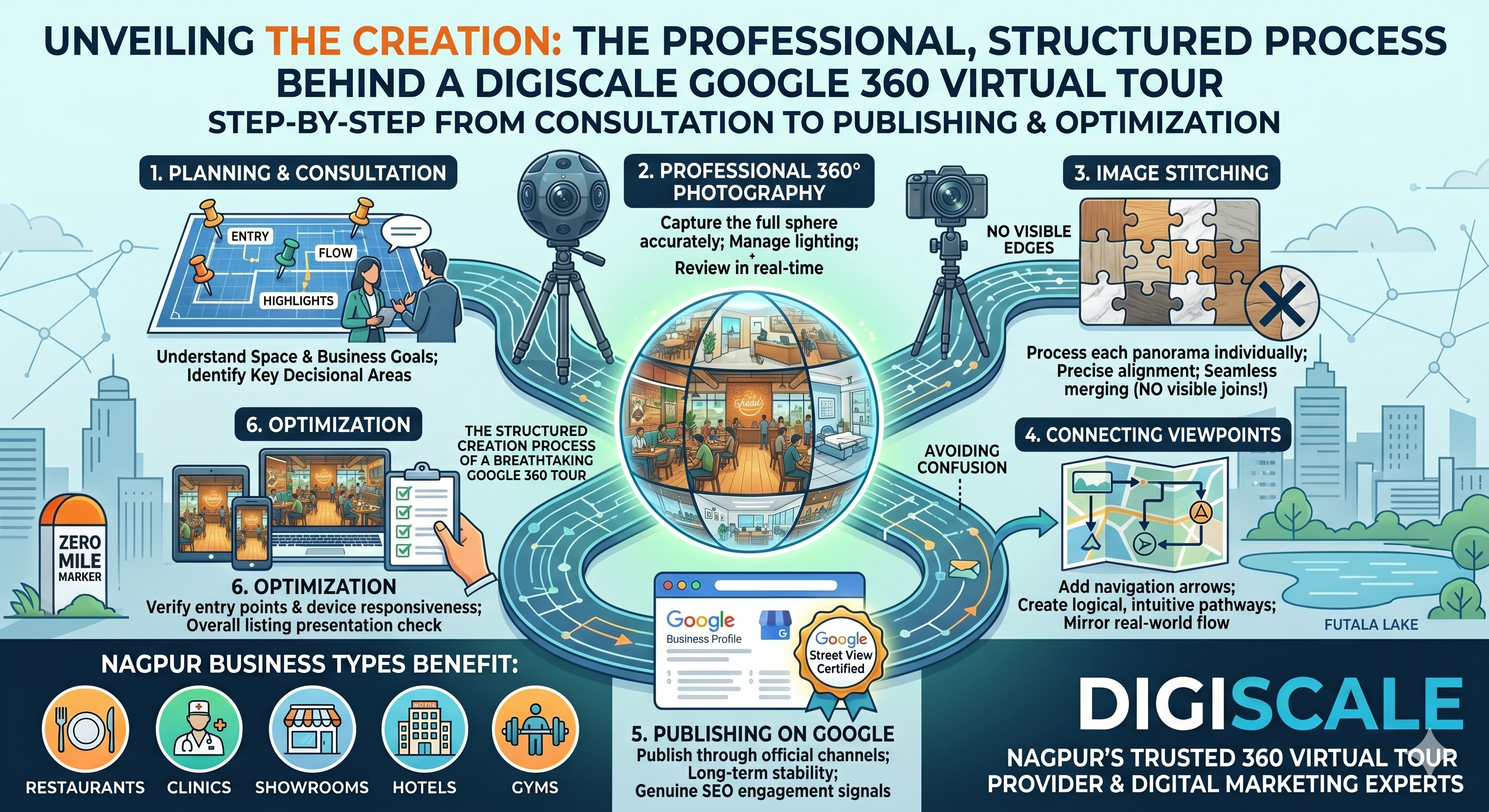
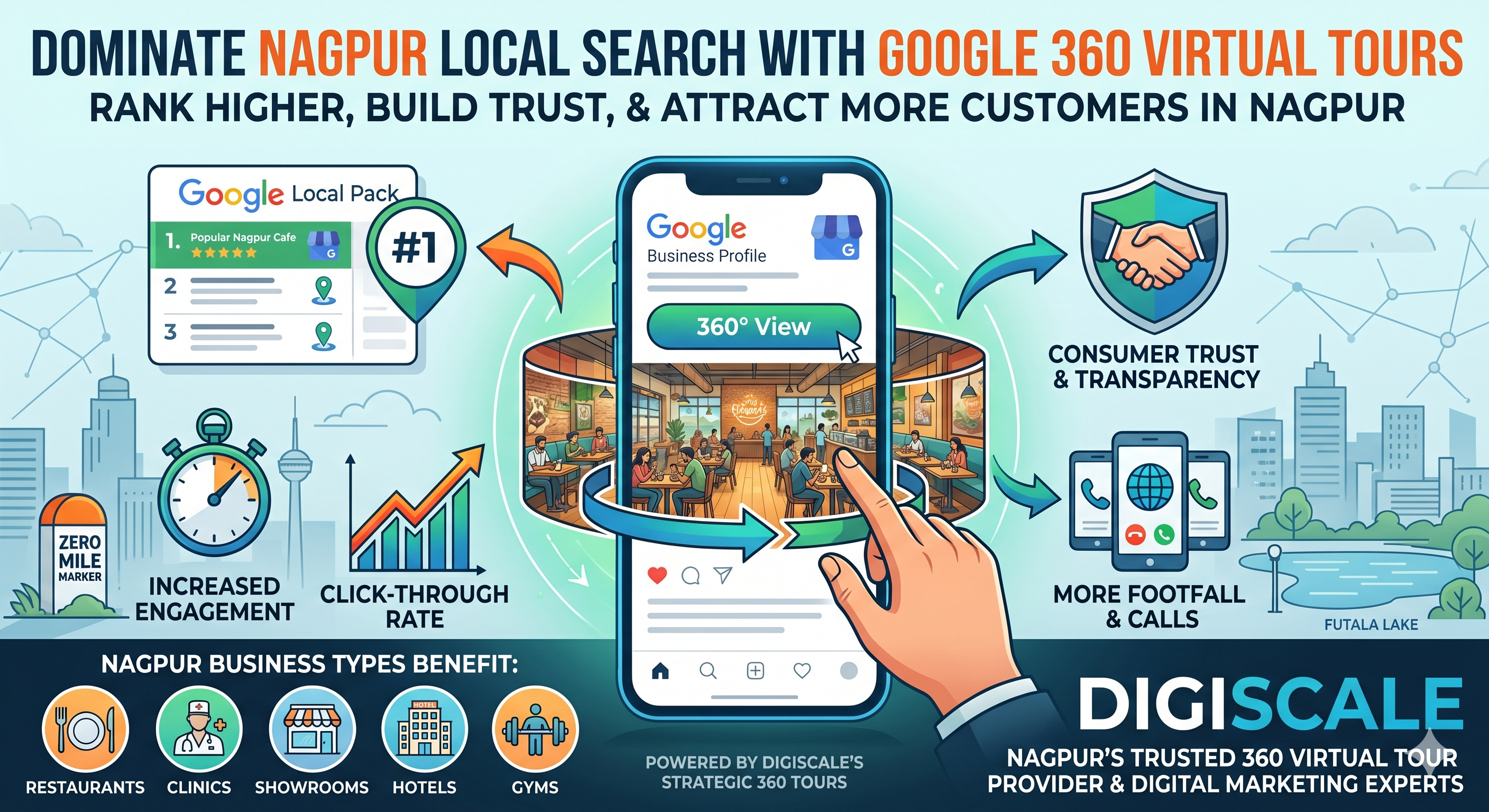
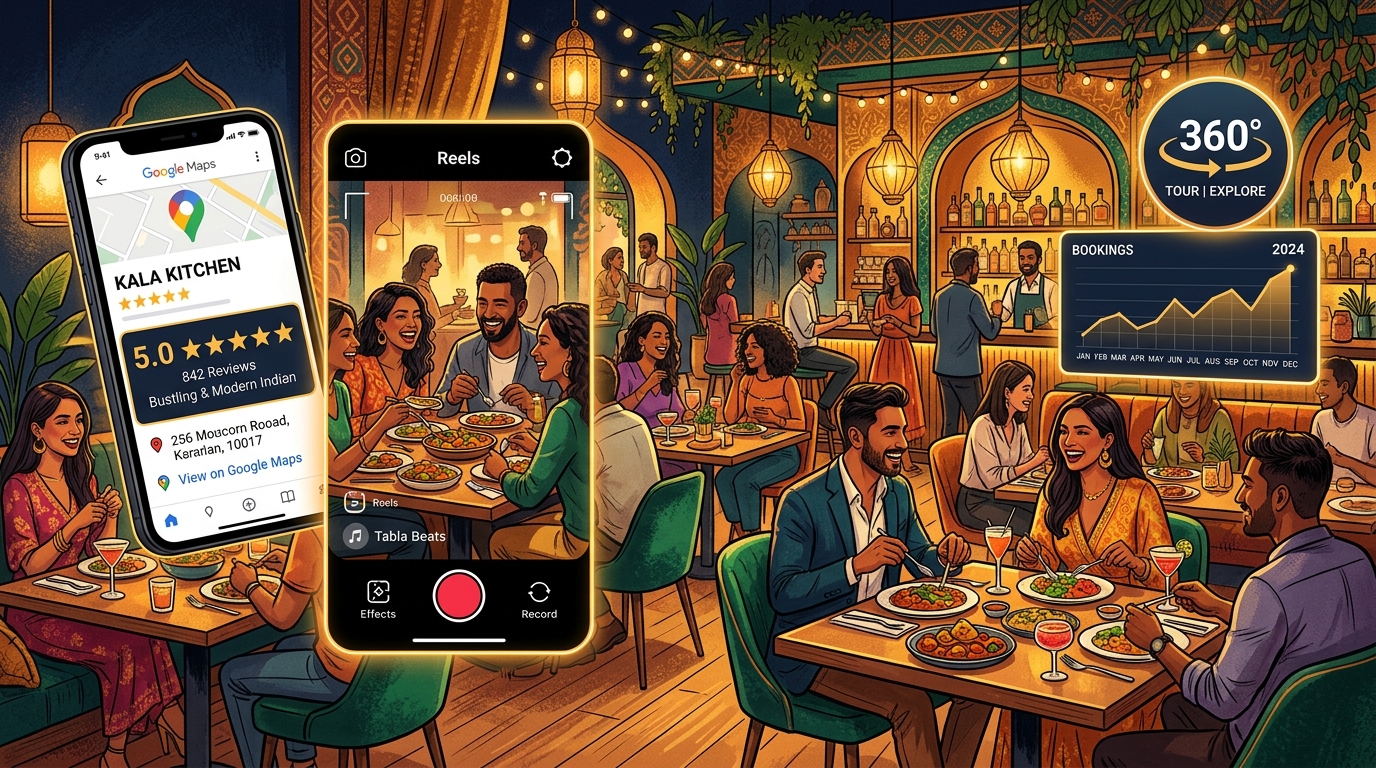
The restaurants that consistently appear in the top three Local Pack results for food-related searches in their area have three things in common: they have high review counts with recent reviews, they have rich, recent photo libraries on their Google Business Profile, and many of them have a Google 360 Virtual Tour that lets searchers explore the interior before deciding to visit.
For Misto Cafe in Nagpur, a Digiscale client, Google Maps is a primary source of new customer discovery. The cafe's Google Business Profile combines a strong review base, regular photo updates, and a 360 virtual tour that gives prospective diners a complete preview of the dining experience and ambiance before they leave their homes.
Instagram — Where Desire Is Created
Nobody visits a new restaurant in India without first checking their Instagram. This is the reality for the under-40 demographic across Indian cities. A restaurant without an active, visually compelling Instagram presence is invisible to this audience.
But the Instagram strategy that works for Indian restaurants in 2026 is not posting food photos. Every restaurant posts food photos. The strategy that drives actual table bookings is creating content that makes someone imagine themselves in your restaurant.
Ambiance content that shows the full dining experience, not just the plate. Process content that shows the kitchen at work, the bartender crafting a cocktail, the dessert being plated. Cultural content that connects the restaurant to local events, festivals, and moments. Customer experience content that, with permission, captures the joy of dining there.
For restaurants in Nagpur and across India, Digiscale's social media management service is built around this distinction. We produce content that sells the experience, not just the menu.
Google 360 Virtual Tour — The Conversion Bridge
A prospective diner who has seen your Instagram content and is now evaluating whether to make a reservation will search for you on Google. What they find on your Google Business Profile at that moment is the deciding factor.
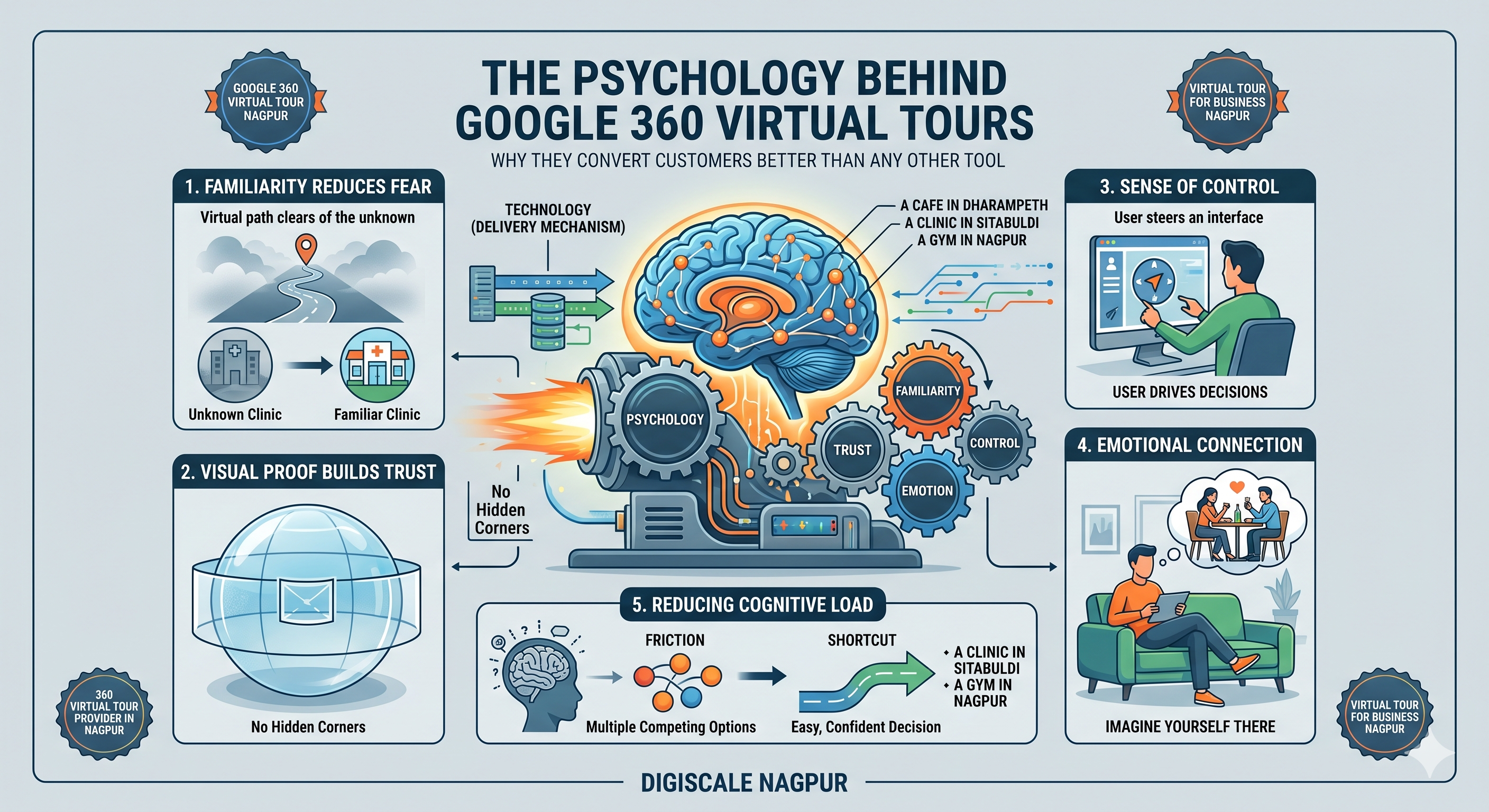
A Google 360 Virtual Tour published on your listing gives this prospective diner the ability to virtually walk through your restaurant before booking. They can see the lighting. They can explore the seating layout. They can get a feel for the atmosphere and whether it fits the occasion they are planning.
This virtual preview does something that static photos and written descriptions cannot: it reduces the uncertainty that causes reservation hesitation. A diner who has already explored your restaurant virtually feels like they know what to expect. That familiarity is what converts a considering visitor into a confirmed booking.
Building a Review Strategy for Indian Restaurants
Restaurant reviews are the most heavily used trust signal in food discovery in India. A restaurant with 400 reviews averaging 4.3 stars consistently outperforms a restaurant with 30 reviews averaging 4.8 stars for Google Map visibility and customer confidence.
Volume matters as much as rating. This is because a high volume of reviews tells Google that many people have engaged with your business, which is a strong prominence signal. It also tells prospective customers that your rating reflects a large and varied customer sample rather than a self-selected group.
The most effective review generation strategy for Indian restaurants is embedding the ask into the end-of-meal experience. Train your staff to mention the Google review to satisfied diners. Display a QR code on the bill that links directly to your Google review form. Send a WhatsApp follow-up to regular customers with a direct review link.
Never incentivise reviews with discounts or free items. Google's guidelines prohibit this and the risk of policy action against your listing is not worth the temporary boost.
Respond to every review. For negative reviews especially, a professional, calm response that acknowledges the experience and offers a resolution is read by future customers as carefully as the original complaint. How you handle criticism publicly reveals more about your restaurant than any promotional content.
Seasonal and Festival Content Strategy for Indian Restaurants
India's restaurant category is heavily influenced by festivals, seasons, and cultural events. A restaurant content strategy that aligns with this calendar consistently outperforms one that ignores it.
- Ganesh Chaturthi in Maharashtra brings the largest footfall surge of the year for cafes and restaurants near puja venues. Pre-festival content that highlights special menus, festive seating, or celebration-appropriate offerings reaches audiences who are actively planning their festival dining.
- Valentine's Day, though not a traditional Indian festival, produces significant restaurant bookings across Indian cities. Couples seeking a special dining experience for the occasion are searching weeks in advance. Restaurants that create specific content and Google Posts for the occasion capture this demand early.
- Winter in Nagpur from November through February is peak dining season. Outdoor seating, winter menus, and season-specific ambiance content perform strongly during this period.
Building this seasonal calendar into the content strategy three to four weeks in advance is what separates restaurants that capitalise on these moments from those that scramble to post generic content the day before.
Zomato and Swiggy — The Delivery Channel Strategy
Online food delivery platforms are a significant revenue channel for Indian restaurants in 2026 but they come with important strategic considerations.
Zomato and Swiggy charge commissions that typically range from 20 to 30 percent of order value. For many restaurant categories and margin structures, this makes delivery orders significantly less profitable than dine-in orders. A restaurant that optimises for delivery volume at the expense of dine-in experience may be growing revenue while shrinking profit.
The strategic role of Zomato and Swiggy for most Indian restaurants should be as a discovery channel and customer acquisition tool, not as the primary revenue engine. A customer who orders from you on Zomato and has a great experience is a candidate for an in-person visit. The delivery platform introduced them. The experience converts them into a dine-in customer.
Your Google Business Profile, Instagram, and 360 virtual tour should all make the transition from delivery customer to dine-in customer as easy and attractive as possible.
Digiscale helps restaurants and food businesses across India build the digital presence that fills tables consistently. Contact us today for a free consultation.
Frequently Asked Questions
What is the most important digital marketing investment for a restaurant in India?
Optimising your Google Business Profile is the highest-priority foundational investment. It directly determines your visibility on Google Maps, which is where the majority of Indian consumers discover new dining options. From there, a 360 virtual tour amplifies that Google presence significantly.