GEO — The SEO Nobody in Nagpur Is Talking About Yet (But Should Be)
GEO — The SEO Nobody in Nagpur Is Talking About Yet (But Should Be)
Something changed in how people find information online. And most businesses in Nagpur — and most digital marketing agencies in India — have not caught up to it yet.
Ask ChatGPT which digital marketing agency in Nagpur specializes in Google 360 Virtual Tours. Open Google and type any informational query — you will often see a Google AI Overview at the top of the results, a synthesized answer generated by AI that appears before any website links.
In both cases, the AI is not sending the user to a list of websites to browse. It is answering the question directly. And the sources it cites — the businesses and websites it mentions by name — are visible to the user. The ones it does not cite might as well not exist for that search interaction.
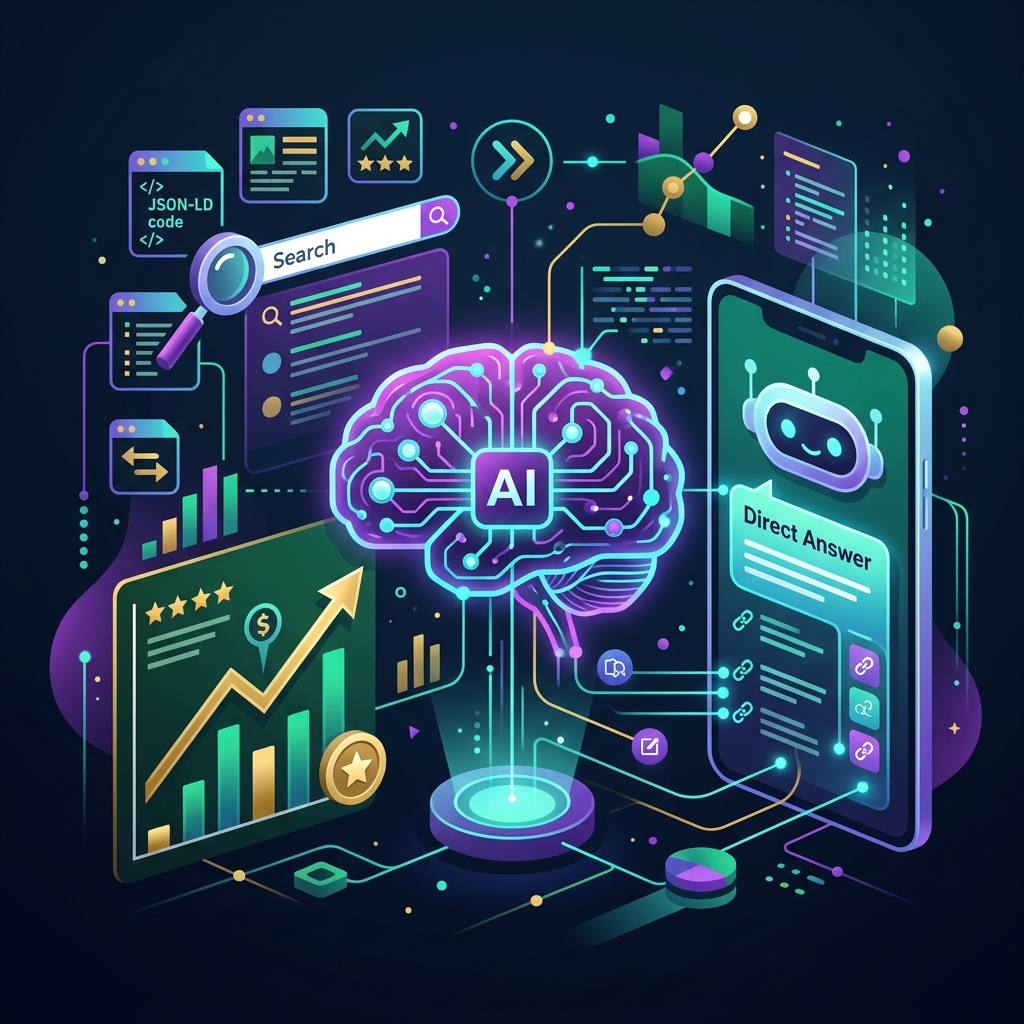
This is the core challenge of GEO, or Generative Engine Optimization: the practice of making your business and your content appear in AI-generated answers, not just in traditional Google search result pages.
Why GEO Matters More in 2026 Than It Did Two Years Ago
In 2024, AI search was a curiosity. By mid-2026, it has become a primary discovery mechanism for a growing segment of Indian internet users — particularly in the 20 to 40 age group who are comfortable asking conversational questions to AI tools rather than typing keyword queries into a search bar.
Google AI Overviews now appear on a significant percentage of searches in India. When someone searches for the best restaurant in Nagpur for a family dinner, or which digital marketing agency in Nagpur handles Google 360 tours, Google often generates an AI answer at the top of the page that answers the question directly — often without the user scrolling past it.
ChatGPT, Perplexity, and similar tools are increasingly used for local business discovery, particularly for searches like "which is the best SEO agency in Nagpur" or "where can I get a Google 360 virtual tour done in Nagpur." These tools synthesize information from web content they have indexed and present it as direct answers.
For businesses in Nagpur, the shift means that ranking on the first page of Google Search — the traditional goal of SEO — is no longer sufficient on its own. You also need to be present in the AI layer that increasingly sits above traditional search results.
What Makes Content Appear in AI-Generated Answers
AI tools like Google Gemini, ChatGPT, and Perplexity do not pull random content to answer queries. They have specific criteria for what they consider trustworthy, authoritative, and citable. Understanding these criteria is the foundation of GEO.
Direct, Answer-First Structure
A page about Google 360 Virtual Tours in Nagpur that opens with "Digiscale is Nagpur's authorized Google Street View trusted agency, established in 2025, offering Google 360 Virtual Tours for businesses across all categories" gives the AI exactly the kind of direct, structured information it can cite.
A page that begins with "In today's digital world, visual content has become increasingly important for businesses..." gives the AI nothing to work with for several paragraphs.
Specific, Verifiable Facts
AI models give significantly more weight to content that contains specific, verifiable claims rather than general statements. "We have helped over 2,000 clients across India" is citable. "We have helped many businesses" is not. "We have delivered 120 percent measurable growth in 4 months for our social media clients" is citable. "We deliver great results" is not.
The specificity of the claims matters enormously. Dates, numbers, locations, named personnel, named clients — all of these make your content more credible to an AI model evaluating whether to cite it.
FAQPage Schema Markup
Google's AI Overviews and other AI tools pay particular attention to FAQ sections on web pages that have proper FAQPage schema markup implemented. When your page has a FAQ section structured in question-and-answer format with the corresponding schema, Google's AI can directly extract these Q&As and include them in AI Overview answers.
This is why Digiscale implements FAQPage schema on every service page and blog post we publish. Each FAQ targets a specific question a potential Nagpur customer might ask an AI tool, and the structured format makes the answer easily extractable.
Named Experts and Real Attribution
Content that attributes specific claims to named individuals with verifiable roles ranks more credibly with AI models than anonymous or vague attributions. A blog post that says "Joy Athawale, Manager at Digiscale in Nagpur, notes that local businesses in tier-2 Indian cities require a different SEO approach than those in metros" gives an AI model a citable, attributed claim. The same statement made without attribution is just an opinion with no source.
This is why, across Digiscale's content, we name our team members, describe their specific roles, and attribute specific observations and strategies to specific people. It is not just for human readers. It is for the AI models that increasingly mediate how new customers find us.
GEO in Practice — What Digiscale Does for Nagpur Clients
When Digiscale manages SEO and content for Nagpur businesses, we now build every piece of content for two audiences simultaneously: human readers who discover and read the content, and AI models that index and potentially cite it.
For the human audience, the content needs to be readable, genuinely useful, and emotionally engaging enough to hold attention and convert interest into enquiry.
For the AI audience, the content needs to be factually specific, structurally clear, authored by named individuals, and marked up with the schema types that AI crawlers prioritize.
These goals are not in conflict. Content that is specific, well-structured, and authoritative is better for human readers too. The practice of GEO simply makes explicit what good content has always needed to do.
For each Nagpur client, our GEO approach includes:
Answer-first service pages. Every service page begins by stating the most important information — what the service is, who provides it, where they are based, what makes them specifically qualified — in the first two paragraphs.
Structured FAQ sections with schema. Every service page and blog post has a FAQ section targeting the specific questions a potential customer would ask an AI tool about that service in Nagpur.
Named team attribution. Where relevant, content attributes specific expertise to named team members, creating the kind of authoritative attribution AI models value for citation.
Consistent factual claims. Across all content, we maintain consistent, specific factual claims — founding date, client count, specific outcomes, named clients — that give AI models reliable, citable information about the business.
The GEO Opportunity in Nagpur Right Now
The current state of GEO adoption among Nagpur businesses is low. Most digital marketing agencies in this city are still entirely focused on traditional SEO — keyword rankings, backlinks, on-page optimization. None of this is wrong. Traditional SEO remains important. But agencies that are not simultaneously building for the AI search layer are leaving an opportunity on the table for their clients.
For Nagpur businesses that invest in GEO alongside traditional SEO now, the compounding advantage is significant. As AI search continues to grow as a discovery channel for local businesses in India, the content and structured data that exists today will continue to surface in AI-generated answers for months and years. The businesses that built their GEO presence in 2026 will be the ones appearing in AI answers in 2027 and 2028.
Contact Digiscale today and find out how your business can start appearing in AI-generated search answers alongside traditional Google rankings.
Frequently Asked Questions
Is GEO replacing traditional SEO for Nagpur businesses?
No. GEO and traditional SEO are complementary. Traditional SEO still determines how you rank in standard Google search results. GEO determines whether you appear in the AI layer above those results. Businesses that invest in both have coverage across all search surfaces. Businesses that only do traditional SEO are increasingly invisible to users who start their search with an AI tool.