The Complete Guide to Off-Page SEO for Indian Businesses in 2026
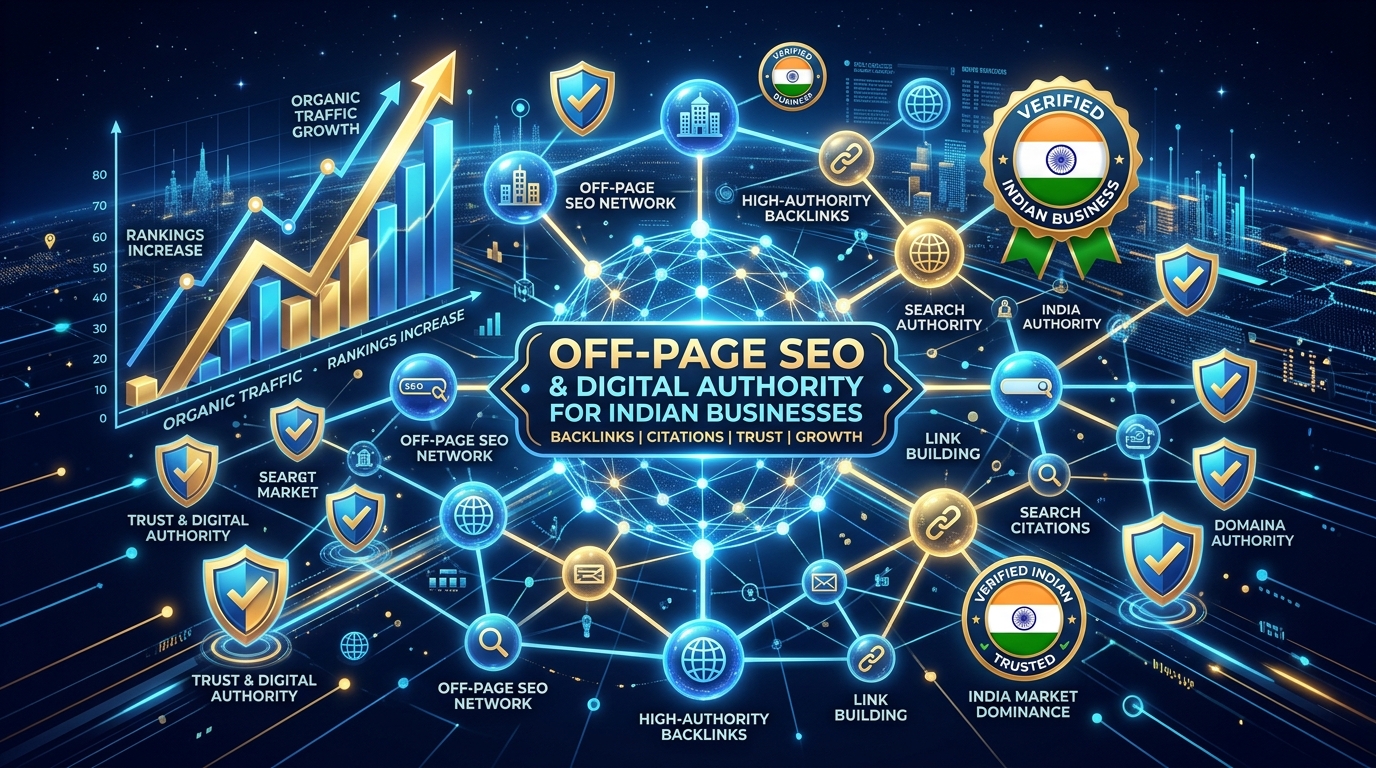
Most Indian businesses and even many digital marketing agencies focus almost entirely on on-page SEO. Keywords on the page. Meta titles and descriptions. Heading structure. Internal links. All of this is important. None of it is sufficient on its own.
The reason two websites with equally well-optimised on-page SEO rank differently in Google is off-page SEO. The authority, trust, and reputation signals that exist outside your website, across the broader internet, that tell Google whether your website deserves to rank above its competitors.
This guide explains what off-page SEO actually means for Indian businesses, what works in 2026, and what tactics to avoid.
What Off-Page SEO Is and Why It Matters
When Google's algorithm ranks websites, it is essentially making a judgment about which websites are the most authoritative, trustworthy sources of information or the most reliable businesses for a given query.
On-page SEO tells Google what your website is about. Off-page SEO tells Google how much the rest of the internet trusts and endorses what you are saying.
The primary mechanism through which the rest of the internet expresses this trust is backlinks. A backlink is a link from another website to your website. When a credible, relevant website links to yours, it is essentially voting for your website's credibility. The more high-quality votes you have, the more authority Google assigns your website, and the better you rank.
But off-page SEO in 2026 is about more than just links. It includes brand mentions, local citations, review signals, social proof, and increasingly, how AI-powered search tools perceive and cite your content.
The Types of Backlinks That Actually Matter for Indian Websites
Not all backlinks are equal. A link from a website with a Domain Authority of 80 that is genuinely relevant to your industry is worth more than 100 links from low-quality directories or irrelevant websites.
For Indian businesses, the backlinks that carry the most ranking weight come from:
- Indian news and media websites. Links from YourStory, Business Standard, Economic Times, NDTV, and similar Indian media properties carry significant authority and are indexed and trusted heavily by Google India. Getting a mention or feature in these publications, even without a direct link, contributes to brand authority.
- Industry-specific Indian directories and platforms. A clinic linked from Practo. A business linked from IndiaMart. A startup mentioned on Crunchbase India. These relevant, category-specific links tell Google that your business is legitimately part of its industry ecosystem in India.
- Educational and government domains. Links from .edu and .gov domains carry enormous weight. For most Indian businesses, these are difficult to earn but occasionally possible through partnerships with local colleges, government trade programs, or similar connections.
- Guest posts on Indian business and industry blogs. Writing genuinely useful content for established Indian business blogs in your industry, with a natural link back to your website, builds both backlinks and brand authority simultaneously.
- Regional and local Indian directories. JustDial, Sulekha, Shiksha.com for educational businesses, and other regional directories provide important local citation signals even when the links are nofollow.
What Does Not Work in 2026 for Indian Businesses
The Indian SEO industry has historically been prone to tactics that worked years ago and are now actively harmful.
- Buying bulk backlinks from link farms or offshore providers. Google's Penguin algorithm is sophisticated enough to identify unnatural link patterns and will penalise websites that have obviously purchased links at scale.
- Forum signature links and comment spam. Placing your website URL in forum signatures or comments across random forums provides no ranking benefit and can attract a spam signal to your domain.
- Irrelevant directory submissions. Submitting your website to hundreds of generic, low-quality directories purely to increase link count. This does not help and can harm through spam association.
- Private Blog Networks. Networks of sites set up purely to sell links to each other. Google detects these effectively and penalises both the linking and linked domains.
The fundamental question to ask about any potential backlink is: does this link exist because someone genuinely wanted to share or reference my business, or does it exist purely for SEO? Google's algorithm is increasingly effective at distinguishing between the two.
The Off-Page SEO Strategy That Works for Indian Businesses
Build Local Citations First
For any Indian business with a physical location, the foundation of off-page SEO is local citation building. Submit your business to every major Indian directory with exactly consistent Name, Address, and Phone information.
The list of essential Indian citations: Google Business Profile, JustDial, Sulekha, IndiaMart, Facebook Business Page, Bing Places, Yellow Pages India, Shiksha.com (educational), Practo (healthcare), MagicBricks or 99acres (real estate). Category-specific platforms relevant to your industry beyond this core list.
Earn Media Mentions Through Genuine Expertise
The most sustainable source of high-quality backlinks for Indian businesses is being genuinely expert in your field and sharing that expertise publicly. Write a guest article for a reputable Indian business publication. Answer journalist queries on platforms like HARO or similar Indian equivalents. Get quoted in a local newspaper article about your industry.
These mentions and links come from real editorial decisions, carry real authority, and compound over time in ways that purchased links never can.
Leverage the Content You Are Already Creating
Every blog post on your website is an asset that can earn backlinks if it is genuinely useful and widely shared. A comprehensive guide to local SEO in India, published by Digiscale, will earn links from other marketing blogs, local business communities, and industry resources in a way that a service page never will.
For Indian businesses, the content types that earn the most organic backlinks are original research and surveys about Indian consumer behaviour, comprehensive local market guides for specific Indian cities, case studies with real named clients and specific outcomes, and tool or resource pages that provide genuine utility.
Build Relationships With Local Indian Media
Local journalists in every Indian city are constantly looking for credible local business voices to quote on digital marketing, entrepreneurship, technology, and business growth topics. Being a reliable, knowledgeable source for your local media builds brand authority and earns mentions that translate into trust signals even without direct links.
For Digiscale in Nagpur, this means being visible in local business conversations, participating in Nagpur entrepreneurship communities, and being the agency that local media contacts when they want perspective on digital marketing trends in the region.
How Digiscale Builds Off-Page SEO for Indian Clients
Our off-page SEO service for Indian businesses covers the complete spectrum: local citation building and auditing for NAP consistency, strategic guest posting on relevant Indian platforms, review signal management across Google and category-specific directories, and content strategy that earns natural backlinks through genuinely useful published material.
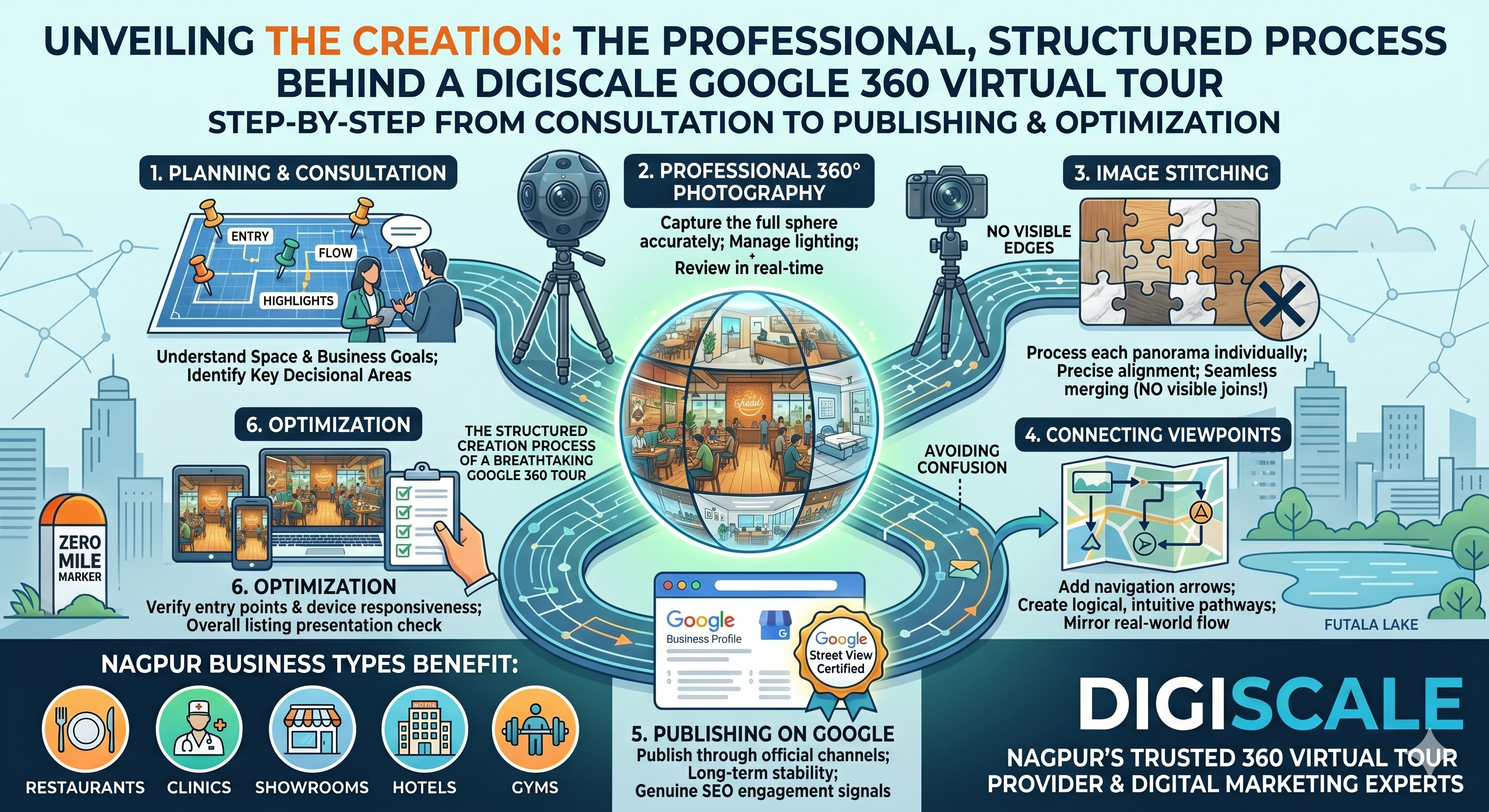
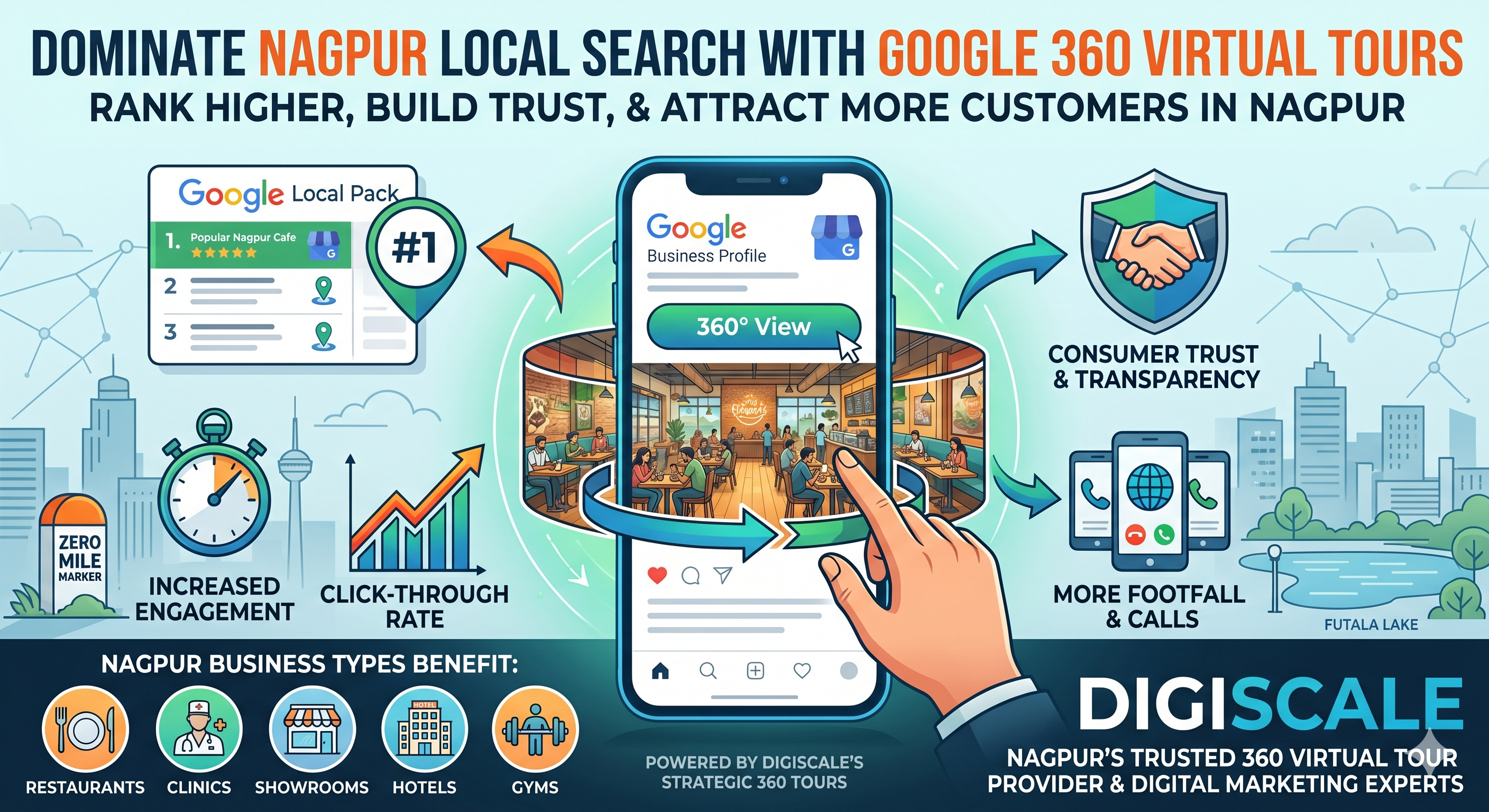
For clients who are also working with us on Google 360 Virtual Tours, the tour itself becomes an off-page authority signal. Being featured as a Google Street View trusted business, by an authorized agency, is a credible third-party verification that contributes to the broader brand trust Google considers in its algorithm.
Digiscale provides complete off-page SEO services for Indian businesses, from local citation building to strategic content and media outreach. Contact us to find out what is holding your website's authority back.
Frequently Asked Questions
How many backlinks does an Indian business website need to rank?
Quality matters far more than quantity. Ten links from genuinely relevant, high-authority Indian websites will outperform 1,000 links from irrelevant directories. Focus on earning fewer, better links rather than acquiring high volumes of low-quality ones.