What Is Digital Marketing and Why Every Indian Business Needs It in 2026
What Is Digital Marketing and Why Every Indian Business Needs It in 2026
There is a moment that most Indian business owners go through at some point in the last few years. They realise that a competitor who offers a noticeably worse product or service is somehow getting more customers than they are. The competitor's Google listing appears first. Their Instagram has thousands of followers. Their website loads in under two seconds on a phone.
And the business owner, who has spent years building a genuinely good product, wonders what went wrong.
Nothing went wrong with the product. Something went wrong with visibility. And that is exactly the problem digital marketing exists to solve.
What Digital Marketing Actually Means
Digital marketing is the practice of promoting your business through digital channels so that customers can find you, trust you, and choose you over competitors.
That definition sounds simple. The confusion comes from the fact that digital marketing is not one thing. It is a collection of disciplines that each work differently, target different moments in the customer journey, and require different skills and tools.
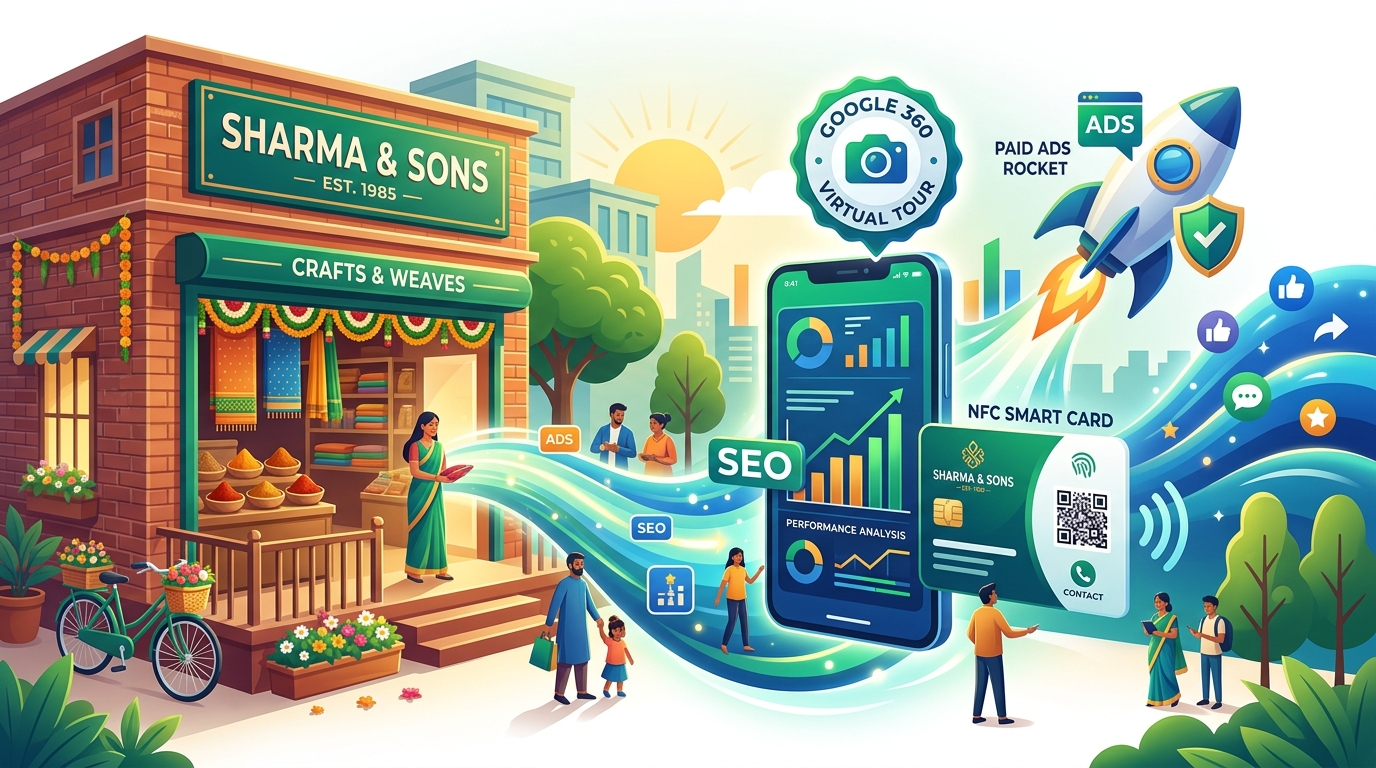
The major components of digital marketing that matter for an Indian business in 2026 are:
Search Engine Optimization is the practice of improving your website and online presence so that Google shows your business near the top of search results when potential customers search for what you offer. It is not paid advertising. It is earned visibility built over time through content quality, technical website health, and authority signals.
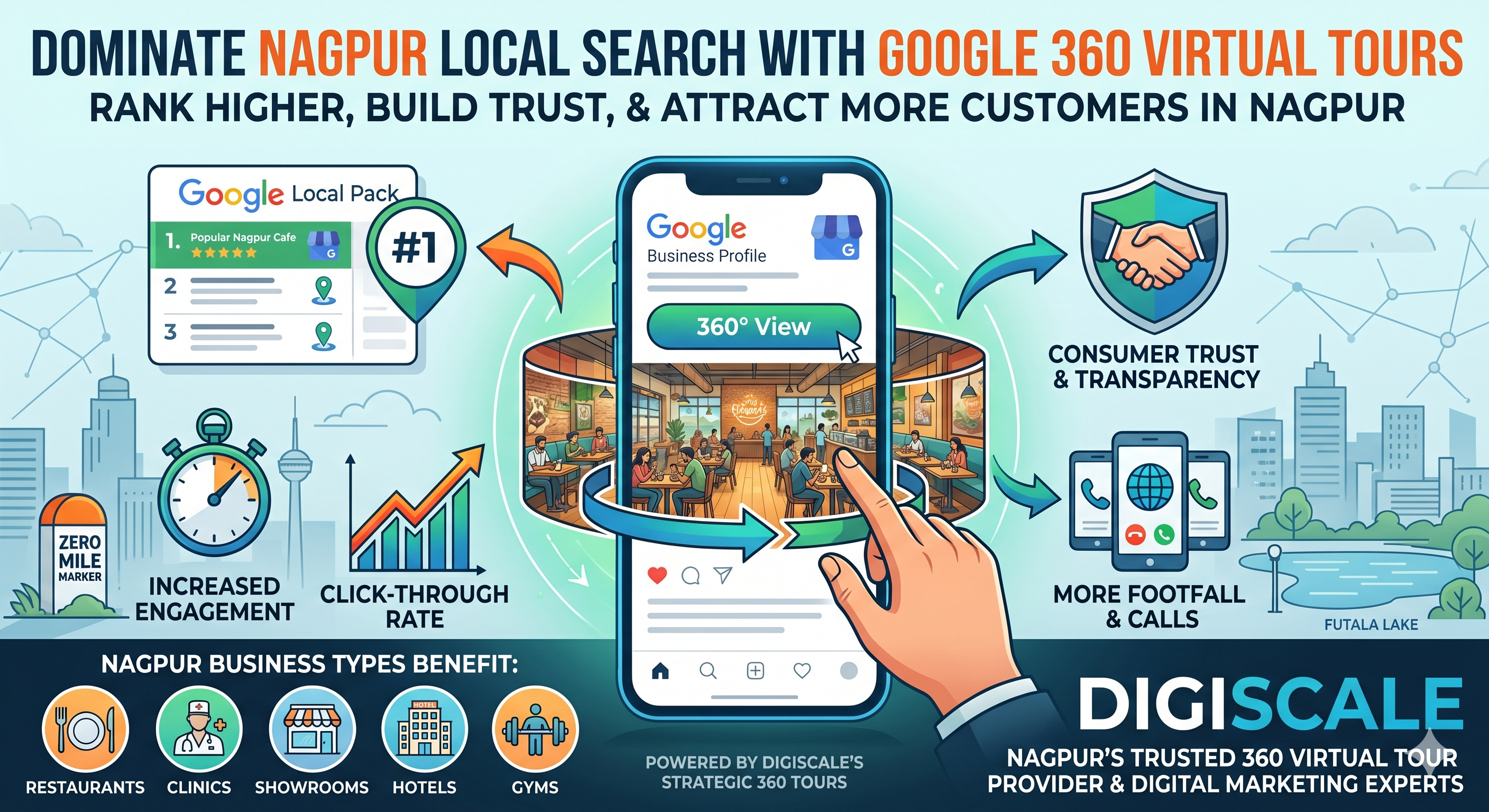
Google Business Profile optimization is the management of your free listing on Google Maps and Google Search. For any local business in India with a physical location, this is often the most important digital asset you have. When someone searches for a clinic near me or a restaurant in your city, your Google Business Profile determines whether they see you or your competitor first.
Social Media Management is the strategic creation and distribution of content across Instagram, Facebook, YouTube, and LinkedIn to build brand awareness, grow an audience, and drive enquiries. For most Indian consumer businesses in 2026, Instagram is the primary discovery channel for new customers under 40.
Performance Marketing covers paid advertising through Google Ads and Meta Ads. Unlike organic channels, paid ads produce results almost immediately. You pay for each click or impression, and the traffic stops the moment the budget stops. Done correctly, it is one of the most controllable and measurable marketing channels available.
Website Development is the creation of a fast, professional, conversion-optimised digital presence that works correctly on mobile devices. In India, where over 80 percent of internet browsing happens on smartphones, a website that works poorly on mobile is a business that is invisible to most of its potential customers.
Content Marketing is the creation of genuinely useful content, blog posts, guides, videos, and FAQs, that answers the questions your potential customers are already searching for. It builds authority, earns organic traffic, and positions your business as the trusted expert in your category.
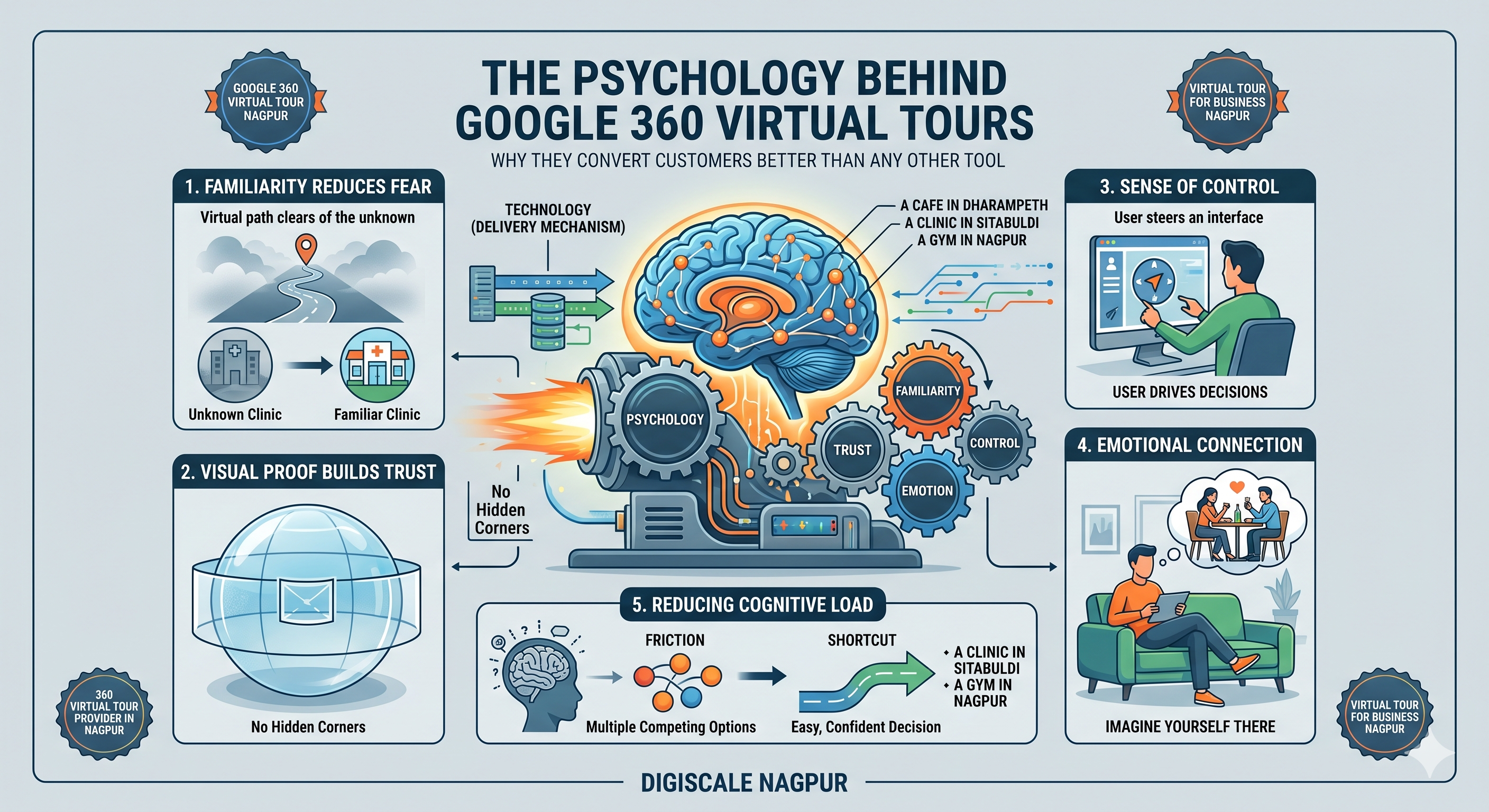
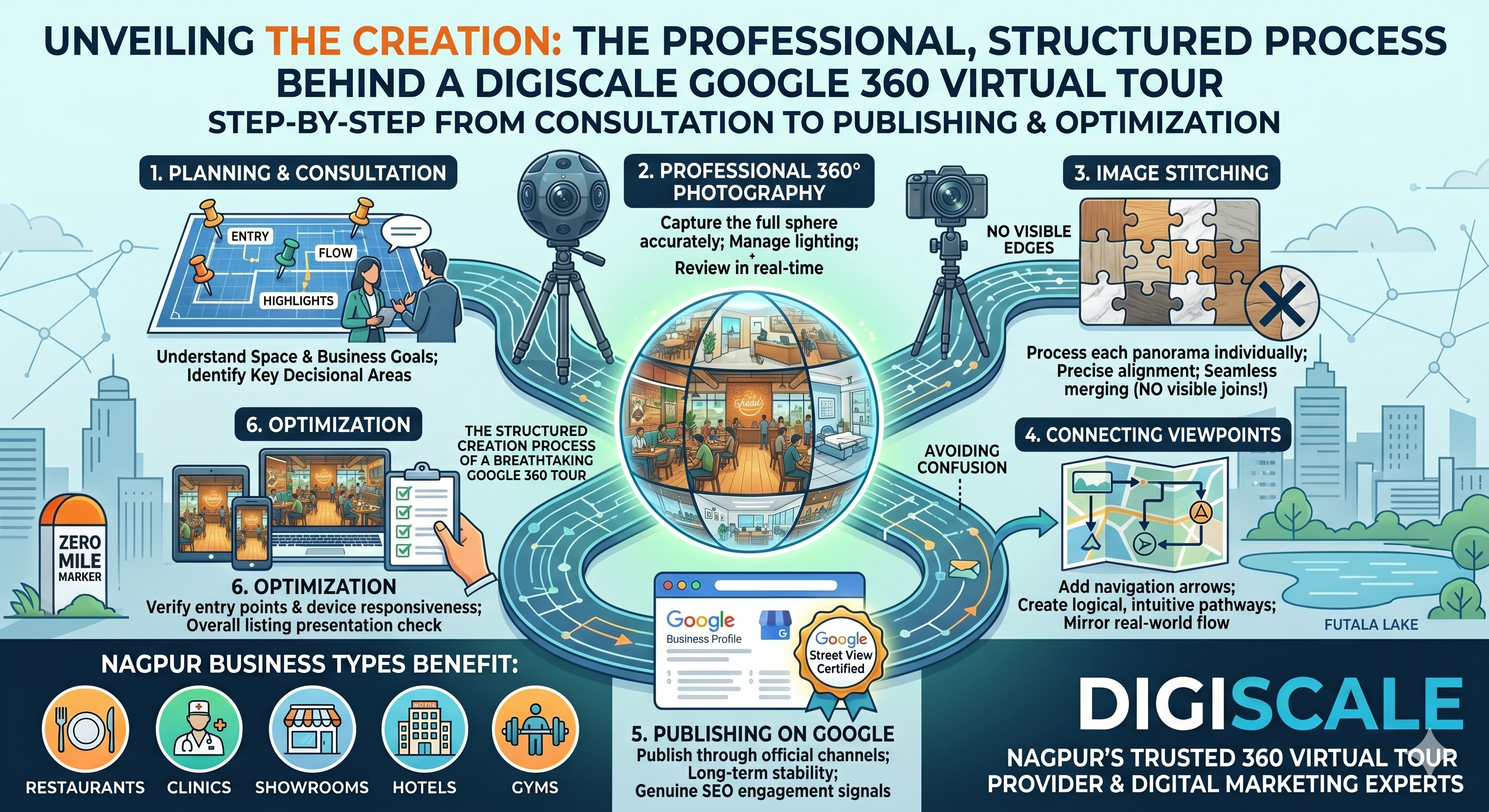
Google 360 Virtual Tours are immersive, interactive walkthroughs of your physical business published directly to your Google Business Profile. They let prospective customers explore your space on Google Maps before visiting, which builds trust, reduces doubt, and improves your local search ranking through increased engagement.
Why Digital Marketing Matters More in India in 2026 Than It Ever Has Before
India crossed 900 million internet users in 2025. The vast majority of that growth came from Tier 2 and Tier 3 cities, on mobile devices, through affordable data plans.
For businesses in cities like Nagpur, Pune, Indore, Surat, and Coimbatore, this means the market that used to rely on foot traffic and word of mouth has fundamentally changed. The customer who walks into your shop today very likely looked you up on Google Maps before they decided to come. The patient who books an appointment probably checked your reviews and photos first. The couple choosing a banquet hall for their wedding almost certainly browsed your Instagram before making an enquiry.
These are not exceptional behaviours. They are the normal customer journey for urban and semi-urban India in 2026.
Businesses that have built a strong digital presence are capturing this customer at every stage of their journey. Businesses that have not are losing customers they never know they lost because the entire decision process happened online without them.
The Difference Between Good Digital Marketing and Generic Activity
Most small and medium businesses in India that have attempted digital marketing on their own have experienced a version of the same frustration. They post on Instagram for a few months and see no real growth. They run a Facebook Boost and get reach numbers that never translate into actual customers. They pay an agency that sends monthly reports full of graphs that do not connect to revenue.
This happens because there is a significant difference between digital marketing activity and digital marketing strategy.
Activity is posting when you remember to, boosting posts without a targeting plan, and updating your Google listing once and forgetting it.
Strategy is understanding who your customer is, which digital channels they use, at what stage of their buying journey, and what content or experience will move them from awareness to action. It is building each channel to reinforce every other channel. It is measuring outcomes in terms that connect to revenue, not just reach.
At Digiscale, this distinction defines everything we do for our clients in Nagpur and across India. We do not run social media accounts. We build customer acquisition systems. We do not create websites. We build digital storefronts that convert visitors into enquiries. We do not take 360 photographs. We publish permanent, authoritative, conversion-driving virtual tours that improve Google rankings and build customer trust simultaneously.
How Much Digital Marketing Costs for an Indian Business
One of the most common misconceptions about digital marketing in India is that it is either free (if you do it yourself) or prohibitively expensive (if you hire professionals).
The reality is more nuanced.
Doing it yourself costs time rather than money. For most business owners in India, forty-five minutes per day managing social media, Google listings, and content is forty-five minutes taken from the work that actually runs and grows the business. Calculated at an honest hourly rate, the cost of DIY digital marketing is often higher than the cost of hiring a professional.
Hiring a local agency like Digiscale provides access to a full team of specialists across SEO, content, social media, performance marketing, and Google services, at a cost that a single in-house hire would not cover. The packages we offer for Indian businesses range from Rs 8,000 per month for foundational local SEO and Google Business Profile management to Rs 40,000 per month and above for full-service digital marketing including paid campaigns, content creation, and advanced strategy.
The right budget depends entirely on your business category, the competitive landscape in your city, and the revenue targets you are working toward.
The Digital Marketing Opportunity That Most Indian Businesses Are Still Missing
Of all the digital marketing tools available to Indian businesses in 2026, Google 360 Virtual Tours remain the most underutilised relative to their impact.
A Google 360 Virtual Tour allows any customer searching for your business on Google Maps to take an immersive virtual walkthrough of your physical space before visiting. It is published permanently to your Google Business Profile. It improves your local search ranking by increasing user engagement time on your listing. And it builds the kind of trust that static photos and text descriptions simply cannot.
Most businesses in Indian cities have not yet adopted this tool. For the businesses that have, the advantage is compounding. The Nagpur businesses that Digiscale has delivered Google 360 Virtual Tours for, including Misto Cafe, Dr. Dayani, Casallionn, and Arya Bhawan, have seen consistent improvements in Google Maps visibility, direction requests, and new customer acquisition.
As an authorized Google Street View trusted agency and a leading Google 360 tour provider in India, Digiscale produces every virtual tour through official Google channels, ensuring permanent placement and full algorithmic weight on your listing.
Where to Start if Your Indian Business Has Never Done Digital Marketing
The most common mistake is trying to do everything at once with a small budget. Start with the highest-impact fundamentals.
Claim and fully optimize your Google Business Profile. This is free and produces direct, measurable impact on local search visibility within weeks.
Fix your website's mobile experience. If your site loads slowly or looks broken on a phone, fix this before spending on any paid acquisition.
Choose one social media platform and do it well. For most Indian businesses, Instagram is the right starting point for consumer categories. LinkedIn for B2B. One platform done well beats three platforms done poorly.
Add a Google 360 Virtual Tour to your listing. For any business where the physical environment is relevant to the customer's decision, this is one of the highest-ROI digital investments available in India today.
From this foundation, build outward into SEO, content marketing, and paid advertising as budget and results allow.
Digiscale is a Nagpur-based digital marketing agency serving businesses across India. Contact us today to find out what the right digital marketing strategy looks like for your specific business.
Frequently Asked Questions
Is digital marketing effective for small businesses in India?
Yes, and often more effective for small businesses than for large ones. Small businesses in Indian Tier 2 cities are competing in a local market where most competitors have not yet built serious digital presences. The opportunity for a first-mover advantage through good digital marketing is significant and available right now.